
Visiting a restaurant, shopping for groceries, or stopping at a local store are everyday activities many people don’t think twice about. For people who rely on medical service dogs, access to these public spaces is essential to maintaining independence and participating in their communities. Service dogs are trained to perform specific tasks that assist people with disabilities, and the Americans with Disabilities Act (ADA) protects their right to accompany their recipients in public.
Although federal law protects service dog access, misunderstandings can still occur in restaurants and retail establishments. Business owners and employees may be unfamiliar with the guidelines, while service dog teams may encounter other customers, pets, or questions about where their dogs are permitted. Understanding public access expectations can help everyone approach these situations with greater awareness and respect.
Understanding Service Dog Public Access Rights
Under the Americans with Disabilities Act, restaurants, grocery stores, retail shops, and other businesses that open to the public generally must allow individuals with disabilities to be accompanied by their trained service dogs. These protections apply even if a business has a pet-free policy because federal law does not consider service dogs pets.
Medical service dogs are individually trained to perform tasks that assist their recipients with specific disability-related needs. Depending on the individual, these tasks may include providing medical alerts, assisting with mobility, retrieving necessary items, or responding to certain symptoms associated with a disability. Because service dogs perform trained tasks that support their recipients, their presence in public spaces serves a vital purpose that may not be immediately apparent to others.
The U.S. Department of Justice’s ADA guidelines state that service dogs are generally permitted in areas where customers are allowed. This includes restaurant dining rooms, grocery store aisles, checkout areas, and other public-facing spaces within a business.
Understanding these protections is an important starting point for businesses developing appropriate policies and for service dog teams navigating public environments.
What Restaurants and Retail Businesses Should Know About Service Dogs
For businesses, welcoming a service dog team usually doesn’t require significant changes to daily operations. The most important consideration is ensuring that employees understand public access requirements and know how to respond appropriately when a service dog enters the establishment.
When it is not apparent that a dog is a service animal, employees may ask whether the dog is required because of a disability and what tasks or work the dog is trained to perform. The ADA permits only these two questions. Employees may not require the individual to disclose a medical diagnosis, provide documentation of a disability, present service dog certification, or demonstrate the dog’s trained tasks.
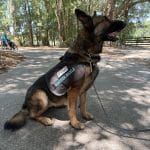
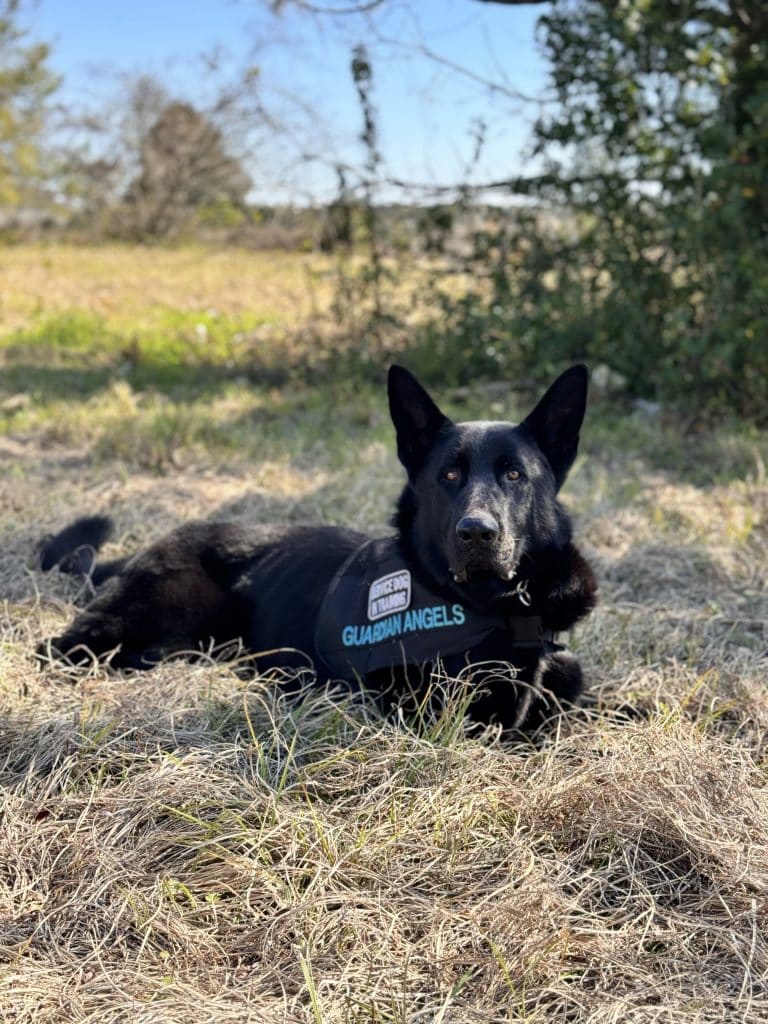
Federal law also does not require service dogs to wear identifying vests or carry special identification. At Guardian Angels Medical Service Dogs, our service dog teams are required by our organization to use a vest while working in public. This practice helps identify the dog as a working service animal and may reduce confusion during public outings, but it is not a federal requirement for all service dog teams.
When employees understand these distinctions, they are better prepared to respond to concerns or questions without placing unnecessary demands on individuals who rely on service dogs.
Service Dogs in Restaurants and Dining Areas
Restaurants have additional considerations because food preparation and service are part of their daily operations. However, the ADA generally requires restaurants to allow service dogs in customer dining areas, even when local health regulations otherwise prohibit animals inside food establishments.
During a meal, a service dog should remain near its recipient, typically resting beneath the table or in another appropriate location that does not obstruct employees or customers. Service dogs may not sit at restaurant tables or eat from customers’ plates, and restaurant employees are not required to provide food, water, or care for the dog.
The presence of a service dog should not prevent a restaurant from maintaining its usual standards for cleanliness, food safety, and customer service. With appropriate positioning and trained behavior, service dog teams can participate in the dining experience without interfering with normal restaurant operations.
Guardian Angels offers additional information for restaurant owners and employees in our article, How to Handle a Service Dog in Your Restaurant, which explains several considerations when welcoming service dog teams into dining establishments.
Service Dogs in Retail Stores and Shopping Centers
The same public access protections generally apply to retail establishments, including grocery stores, pharmacies, clothing stores, and shopping centers. A qualified service dog team should be able to enter customer-accessible areas and receive the same goods and services available to other shoppers.
While shopping, service dogs should remain under control and positioned so customers and employees can move comfortably through aisles and checkout areas. They should not interfere with merchandise, displays, or other shoppers. In grocery stores, service dogs should not be placed in shopping carts. Under ADA guidance, they generally remain on the floor.
Employees may not encounter service dogs frequently, particularly in smaller retail establishments. Understanding public access expectations can prevent confusion and let staff focus on providing the same courteous service they would offer any other customer.
How to Maintain a Safe and Respectful Environment for Everyone
Public access works best when businesses, service dog teams, and other community members understand how their actions may affect one another. While businesses have responsibilities under the ADA, recipients are also responsible for maintaining control of their service dogs and ensuring their behavior remains appropriate for the environment.
Medical service dogs receive extensive training to work in public settings with common distractions. Restaurants may have strong food smells, crowded dining areas, and employees moving between tables, while retail stores may have shopping carts, narrow aisles, loud noises, and other animals. A working service dog must be prepared to navigate these environments while remaining attentive to its recipient’s needs.
Even a well-trained service dog can face unnecessary distractions when other customers try to pet, call, feed, or otherwise interact with the service dog while it is working. Although these actions may be well-intentioned, they can interrupt the dog’s concentration and interfere with its ability to recognize or respond to its recipient’s needs.
Interactions with other dogs can present additional concerns, particularly when an unfamiliar dog approaches a working service dog without adequate control. Giving service dog teams appropriate space and avoiding unnecessary interactions helps create a safer environment for everyone involved.
Guardian Angels discusses these concerns in greater detail in What Every Dog Owner Should Know About Service Dogs and Public Safety, including the importance of respecting working service dogs and understanding how public behavior can affect their ability to perform trained tasks.
Best Practices for Service Dog Teams in Restaurants and Retail Stores
For recipients, preparing for public outings and maintaining appropriate service dog behavior are important parts of working together as a team. Although businesses are required to recognize public access rights, service dogs must also remain under control and behave appropriately in the environments they enter.
At Guardian Angels Medical Service Dogs, we emphasize calm behavior, close positioning, and continued attention to the recipient during public outings. In a restaurant, this generally means the service dog should settle quietly near the recipient without obstructing walkways, approaching other tables, or seeking food from customers. In retail settings, the same principles apply as the team moves through aisles, waits in checkout lines, and navigates around merchandise or other shoppers.
Service dog recipients may also encounter situations where someone tries to interact with their dog or lets another animal approach. When appropriate, a polite request for space can help keep the dog focused and prevent unwanted interactions. These moments can be uncomfortable, particularly when the recipient is managing a medical condition or navigating a busy environment, so respectful communication from those nearby can make a meaningful difference.
Under the ADA, service dogs generally must be harnessed, leashed, or tethered while in public. Exceptions apply when these devices interfere with the dog’s trained work or when the individual’s disability prevents their use. In those circumstances, the recipient must maintain control of the dog through voice commands, signals, or other effective means.
These practices support the working relationship between the recipient and service dog while helping businesses provide a safe, welcoming environment.
When Can a Business Ask That a Service Dog Be Removed?
Although service dogs have public access protections, businesses are not required to accommodate behavior that falls outside ADA standards. A business may ask that a service dog be removed if the dog is not housebroken or is out of control and the recipient does not take effective action to regain control.
For example, you may need to address repeated uncontrolled barking, aggressive behavior, or ongoing interference with employees or customers. However, an isolated bark does not automatically mean a service dog is out of control. Some service dogs are also trained to make sounds as part of a medical alert, so consider the circumstances rather than assuming a single behavior.
If a business has a legitimate reason to request the dog’s removal, the ADA still requires the establishment to offer the individual an opportunity to obtain its goods or services without the service dog present.
Approach these situations thoughtfully, with attention to the dog’s actual behavior and the recipient’s circumstances. When possible, address concerns calmly and discreetly to avoid unnecessary embarrassment or conflict while allowing the business to maintain appropriate standards.
How Businesses and Service Dog Teams Can Address Public Access Concerns
Even when businesses and service dog teams follow public access guidelines, questions or misunderstandings may still arise. An employee may be unfamiliar with ADA requirements, or a recipient may encounter a situation in which access is questioned because of an existing business policy.
In many cases, respectful communication can help clarify the situation. Businesses can reduce the likelihood of these encounters by educating employees about service dog access, explaining what questions are legally permitted, and establishing a consistent approach for addressing concerns. When employees understand the rules before a situation occurs, they are better prepared to respond appropriately.
For recipients, calmly explaining that the ADA permits trained service dogs in public accommodations may help resolve a misunderstanding. If you can’t address an issue directly with an employee, speaking with a manager may offer an opportunity for clarification.
Businesses may also encounter customers with dog allergies or who feel uncomfortable around dogs. Under ADA guidance, allergies and fear of dogs are not, by themselves, valid reasons to deny access to a service dog team. When practical, businesses can address customers’ needs through reasonable arrangements that allow everyone to receive service without unnecessarily restricting the service dog team’s access.
The goal is to encourage informed, respectful interactions that allow businesses and service dog teams to navigate shared spaces appropriately while recognizing the responsibilities established under federal law.
Supporting Greater Understanding of Medical Service Dogs in Public
For individuals living with disabilities, medical service dogs provide trained assistance that can make everyday activities more manageable. Whether visiting a restaurant, shopping for household necessities, or participating in other community activities, staying together as a team is an important part of that support.
Public awareness can make these experiences more comfortable for everyone. When businesses understand service dog access requirements, employees are better equipped to respond appropriately. When members of the public respect a working service dog’s space, recipients can better rely on the assistance their dogs are trained to provide. And when service dog teams maintain appropriate public behavior, they help support positive interactions in the places they visit.
At Guardian Angels Medical Service Dogs, we recognize that education is an important part of building understanding between service dog teams and the communities they are part of. Clear information about public access, responsible service dog behavior, and respectful interactions helps businesses and individuals approach these situations with greater confidence.
Frequently Asked Questions About Service Dogs in Public Places
Can a restaurant or retail store refuse entry to a service dog?
Under the Americans with Disabilities Act, businesses open to the public generally must allow trained service dogs to accompany individuals with disabilities in areas where customers are permitted. This includes restaurants, grocery stores, and retail establishments, even when a business has a no-pets policy. Limited exceptions apply, including situations in which a service dog is not housebroken or is out of control, and the recipient does not take effective action.
Does a service dog need to wear a vest or have certification to enter a business?
The ADA does not require service dogs to wear identifying vests or carry certification. However, Guardian Angels Medical Service Dogs requires our service dog teams to wear a vest in public to help identify the dog as a working service animal and reduce potential misunderstandings. Businesses cannot require certification or special identification as a condition of public access.
What should employees do if another customer is uncomfortable around a service dog?
If a customer expresses concern about a service dog, employees should respond respectfully while recognizing the team’s public access rights. Fear of dogs or allergies alone do not justify denying entry to a service dog team. When practical, employees can help accommodate the needs of those involved through appropriate seating or other arrangements without restricting the team’s access.
Where can I learn more about service dog laws and public access?
Guardian Angels Medical Service Dogs provides additional information about service dog training, public access, and responsibilities through our Frequently Asked Questions page. Business owners and recipients can also review the ADA’s official service animal FAQs for additional clarification on federal requirements. State laws may provide additional protections, so it is also helpful to understand any requirements that apply locally.
Learn More About Guardian Angels Medical Service Dogs
Guardian Angels Medical Service Dogs provides highly trained medical service dogs to veterans, first responders, and civilians living with permanent disabilities. Our work supports the relationship between recipients and their service dogs while promoting education and awareness of the important roles these teams fulfill.
To learn more about medical service dogs, public access, and the mission of our organization, visit Guardian Angels Medical Service Dogs.
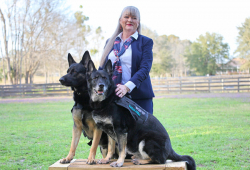
Mrs. Borden’s expertise and accomplishments are acknowledged by numerous national awards from various industries and agencies including the 2018 Corporate Pet Industry Woman of the Year and multiple awards for her organization’s work in mental health and suicide prevention.
She is frequently requested as a Keynote Speaker, and as an Industry Consultant to teach service dog laws to judicial systems, attorneys, and businesses, and to assist in service dog bills in multiple states that were passed into law. In 2020, she started an Institute for Higher Learning and the Borden Veterinary Hospital. Additionally, she has written and teaches college-accredited/VA-approved apprenticeship courses on dog training and service dog training.
- Service Dogs in Restaurants and Retail Stores: Public Access Best Practices - October 15, 2026
- Suicide Prevention Month: How Service Dog Teams Support Connection, Routine, and More! - September 26, 2026
- Final Call for Tickets: Guardian Angels’ Pawtumn Bark-A-Que Is This Saturday - September 29, 2026