
Public access is an important part of life with a medical service dog. For a service dog team, confidence in public comes from preparation, consistency, and the ability to work together through everyday distractions.
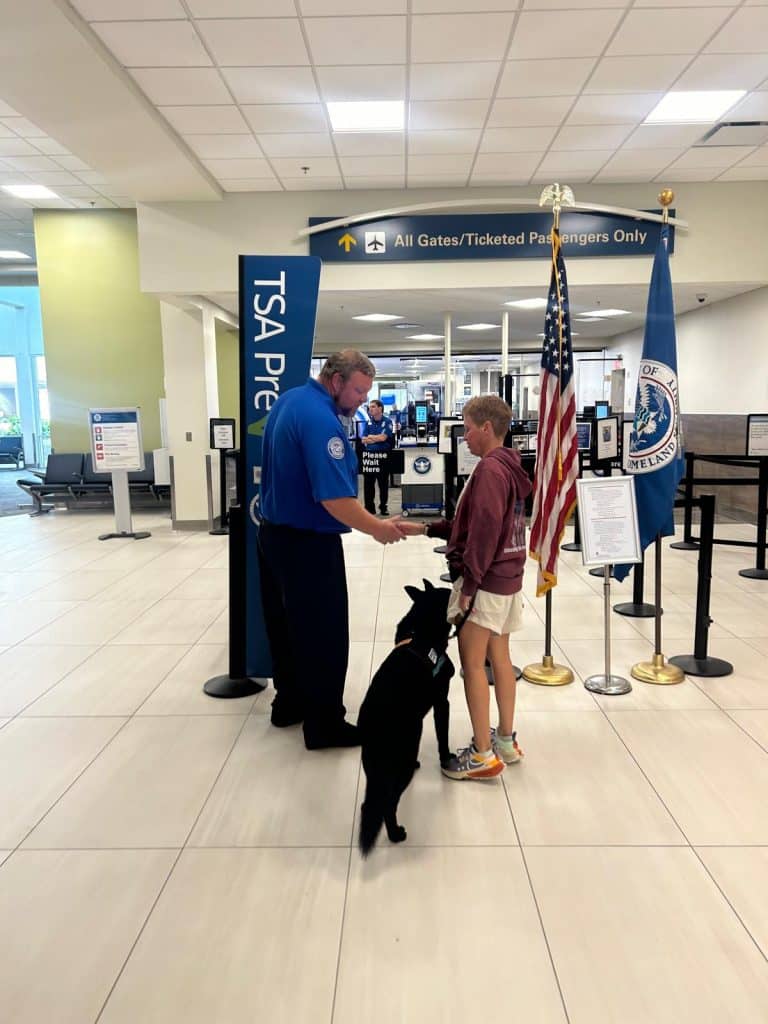
That preparation becomes especially important around the Fourth of July, when loud celebrations, crowded gatherings, and sudden fireworks can make familiar places feel more unpredictable. Stores, restaurants, sidewalks, offices, airports, medical buildings, and community events all bring different challenges. There may be tight spaces, food on the floor, people walking nearby, loud sounds, or strangers trying to interact with the dog.
Because public spaces can change quickly, public access training focuses on real-world readiness. For recipients, public access confidence means being able to navigate daily life with greater support and structure, even during busy or noisy seasons. For the dog, it means staying focused on their work, responding to cues, and remaining steady when the environment changes.
What Public Access Confidence Means
Public access confidence is not about expecting every outing to be perfect. It is about preparing a service dog team to handle common challenges calmly and safely.
A medical service dog must be able to work in a variety of settings while remaining focused on the recipient’s needs, which includes moving through crowds, ignoring distractions, settling quietly when needed, and maintaining appropriate behavior around other people and animals.
Confidence also grows through experience. Each successful outing can help strengthen communication and trust between the recipient and the dog. Over time, the team learns how to navigate public spaces with more awareness and less uncertainty.
Common Public Access Distractions
Every day, public spaces are full of distractions. Some are obvious, while others may happen unexpectedly.
Common distractions can include food on the floor, children running nearby, shopping carts, strollers, mobility devices, loud music, traffic, announcements, crowded aisles, other animals, and people reaching toward or speaking to the dog.
A service dog may notice these distractions, but training helps the dog return focus to the recipient and continue working. Public access training teaches the dog that their role stays the same, even when the environment changes.
or more on this topic, Guardian Angels Medical Service Dogs offers additional insight in its blog on how service dogs handle distractions in public places.
Handling Crowds With Calm Focus
Crowds can be one of the more challenging parts of public access. Busy environments often involve tight spaces, sudden stops, noise, and people moving in different directions.
For a service dog team, moving through a crowd requires communication. The dog needs to stay close, respond to directional cues, and avoid pulling toward distractions. The recipient also needs to be aware of the dog’s position and the space around them.
Confidence in crowds is built gradually. A team may begin in quieter public areas before working up to busier environments, allowing the dog to practice skills without becoming overwhelmed and giving the recipient time to build comfort with the process.
Public access confidence also includes knowing when to adjust. Sometimes the best choice is to pause, step to the side, or take a less crowded route. These decisions help the team move through public spaces more safely.
Why Distraction Training Matters
Distraction training is a key part of preparing medical service dogs for public work. A dog may be calm at home or in a quiet training space, but still needs practice in busier environments.
Real-world settings can include many distractions at once. A grocery store may have food smells, automatic doors, carts, slippery floors, and people walking close by. A restaurant may require the dog to settle quietly near tables, ignore food, and remain calm as people pass.
These skills support the recipient’s ability to participate in daily activities with more confidence. When the dog can remain focused, the team can move through public spaces more smoothly.
Everyday outings also help reinforce training. Walking through a parking lot, waiting in line, entering a building, riding an elevator, or sitting in a lobby can all help a service dog team practice public access skills.
The Importance of Calm Public Behavior
A medical service dog’s behavior in public should support the recipient without creating disruption. Calm behavior helps the team move through public spaces more comfortably.
This behavior includes walking in a controlled position, staying near the recipient, ignoring distractions, and settling quietly when the team is seated or waiting. It also includes staying composed around people who may not understand service dog etiquette.
Some people may try to pet the dog, call to it, make noises to get its attention, or ask personal questions. These moments can be frustrating for recipients, especially when the dog is working.
A confident service dog team is better prepared to navigate these situations while staying focused on the work they are doing together.
Service Dog Etiquette in Public Spaces
Public access confidence is supported when others understand how to behave around working medical service dogs. A medical service dog is not in public for social interaction. The dog is working as part of a team with the recipient.
People should not pet, call to, feed, distract, or interfere with a medical service dog. Even brief distractions can interrupt the dog’s focus.
It is also important to respect the recipient’s privacy. Not every disability is visible, and recipients should not be expected to explain personal medical information to strangers.
When the public understands basic service dog etiquette, it helps create safer and more respectful spaces for service dog teams.
Navigating Everyday Challenges
Even with strong training, public access can come with challenges. A store may be more crowded than expected. Another animal may enter the space. A loud noise may startle people nearby. A stranger may step too close or try to interact with the dog.
These situations require patience and problem-solving. A service dog team may need to pause, redirect, create distance, or leave an area if needed. These choices are part of responsible public access.
The goal is not to force a team through every situation. The goal is to help the team work together safely and effectively.
When recipients understand how to respond to everyday challenges, they can make decisions that support both their needs and the dog’s ability to work.
Service Dogs and Fourth of July Safety
For service dog teams, the Fourth of July can bring unique challenges. Fireworks displays, crowded public spaces, sudden explosions, and unpredictable noises can overwhelm even well-trained dogs. Whenever possible, avoid taking your service dog to fireworks shows or busy holiday events where loud, repeated blasts may create unnecessary stress or interfere with the dog’s ability to work safely.
At home, plan by creating a calmer environment before the noise begins. Close windows and curtains, and turn up the volume on a TV, radio, fan, or white noise machine to help dampen the sound of fireworks outside. Rather than coddling a fearful dog, try to turn the moment into something positive and engaging. Play ball, practice basic training cues, offer a familiar task, or redirect your dog’s attention with an activity they enjoy.
The goal is not to ignore your dog’s fear, but to give them a confident, constructive outlet. By staying calm, upbeat, and prepared, recipients can help their service dogs move through the Fourth of July and other loud events throughout the year with greater confidence and stability.
Why Readiness Standards Matter
Readiness matters because medical service dogs work in spaces shared with others. A dog must be prepared to behave appropriately while still performing the work needed by the recipient.
Readiness standards help protect the team’s safety, focus, and reliability. They also help ensure that the dog can work in public without causing disruption.
These standards are not only about obedience. They are about judgment, stability, communication, and consistency. A service dog needs to know how to respond in real-life situations, and the recipient needs to know how to guide the team through them.
To learn more about specific public access skills, read Guardian Angels Medical Service Dogs’ blog on service dog public access skills and navigating real-world distractions
Confidence Comes From Preparation
Public access confidence is built through training, practice, and teamwork. It grows as a medical service dog, and the recipient learns how to move through the world together.
Distractions, crowds, and everyday challenges are part of public life. With the right preparation, service dog teams can build the skills needed to navigate situations with steadiness and trust.
Guardian Angels Medical Service Dogs is committed to helping recipients and medical service dogs build strong working teams. Through careful training and continued support, service dog teams can develop the confidence needed for real-world public access.
For more information about medical service dogs, public access skills, and the work behind each pairing, visit Guardian Angels Medical Service Dogs today!
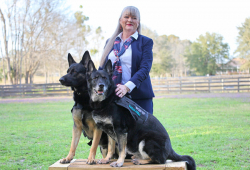
Mrs. Borden’s expertise and accomplishments are acknowledged by numerous national awards from various industries and agencies including the 2018 Corporate Pet Industry Woman of the Year and multiple awards for her organization’s work in mental health and suicide prevention.
She is frequently requested as a Keynote Speaker, and as an Industry Consultant to teach service dog laws to judicial systems, attorneys, and businesses, and to assist in service dog bills in multiple states that were passed into law. In 2020, she started an Institute for Higher Learning and the Borden Veterinary Hospital. Additionally, she has written and teaches college-accredited/VA-approved apprenticeship courses on dog training and service dog training.
- Service Dogs in Restaurants and Retail Stores: Public Access Best Practices - October 15, 2026
- Suicide Prevention Month: How Service Dog Teams Support Connection, Routine, and More! - September 26, 2026
- Final Call for Tickets: Guardian Angels’ Pawtumn Bark-A-Que Is This Saturday - September 29, 2026