

At Guardian Angels Medical Service Dogs, we are dedicated to training highly skilled service dogs to assist veterans, first responders, and civilians living with disabilities.
Our mission is to empower veterans, first responders, and individuals with disabilities by providing highly trained service dogs that help people regain independence and improve their quality of life. However, distractions in public spaces can pose significant challenges, making it crucial for these dogs to maintain focus in all situations.
Service dog training is an extensive process, often lasting six months to two years, depending on the specific tasks required. This rigorous training ensures that our dogs not only master basic obedience but also develop advanced skills tailored to the needs of each recipient. One of the most critical aspects of their training is the ability to remain focused despite external stimuli.
How Guardian Angels Medical Service Dogs Are Trained to Ignore Distractions
Early Socialization: From an early age, our service dogs are exposed to a range of environments, including shopping malls, public transportation, restaurants, and crowded areas. This early socialization helps them become accustomed to different sights, sounds, and smells, reducing sensitivity to distractions. Proper exposure ensures our dogs are comfortable in any setting and can confidently navigate public spaces while assisting their recipient.
Desensitization Techniques: Our trainers gradually introduce service dogs to loud noises, large crowds, and unexpected stimuli. Through repeated exposure and positive reinforcement, our dogs learn to remain calm and focused despite environmental disturbances. We expose them to sirens, honking horns, and other sudden sounds in controlled environments before transitioning to real-life settings to ensure their confidence and adaptability.
Task-Focused Training: Guardian Angels Medical Service Dogs are trained to prioritize their recipient’s needs above all else. Whether detecting medical emergencies or providing mobility support, they learn to ignore environmental distractions while executing their tasks. We reinforce focus by teaching them to maintain eye contact with their recipient and respond reliably to verbal and non-verbal cues.
Reinforcement-Based Training: Our training approach is rooted in positive reinforcement. By using treats, praise, and play, we strengthen a dog’s ability to stay attentive and responsive to commands despite surrounding distractions. Reward-based training fosters a strong bond between the service dog and its recipient, ensuring consistent behavior in all environments.
Controlled Distraction Drills:Our training programs incorporate real-world simulations, such as food temptations, sudden movements, and loud noises. By practicing in controlled environments, our service dogs learn to resist distractions and remain focused. These exercises often take place in high-traffic areas like parks, shopping centers, and busy streets to mimic real-life scenarios as closely as possible.
Common Distractions and How Service Dogs Overcome Them
Loud Noises (sirens, construction, crowds): We use noise desensitization techniques to build our service dogs’ confidence and reduce anxiety in noisy environments. Gradual exposure to loud sounds, combined with reward-based reinforcement, helps them remain composed and attentive.
Other Animals (dogs, cats, wildlife): Service dogs are trained to ignore other animals by reinforcing the focus on their recipient. Our trainers conduct exercises where dogs encounter other animals and receive rewards for maintaining composure, ensuring they remain undistracted in public spaces.
People Trying to Interact (petting, calling, offering treats): Our service dogs are conditioned to respond to “Do Not Distract” commands. Recipients are also educated on how to politely inform the public that their dog is working and should not be disturbed. All of our dogs are required by GAMSD to wear their vest in public.
Unexpected Situations (dropped objects, sudden movements, food on the ground):Impulse control training helps Guardian Angels Medical Service Dogs resist the urge to react to sudden events. This ensures they stay focused on their recipient’s needs, even in dynamic and unpredictable environments.
The Role of the Recipient in Reinforcing Focus
Recipients play an essential role in maintaining their service dog’s focus. Our recipients are required to use the cues and commands that the dogs learned during their training with Guardian Angels Medical Service Dogs.
By using clear cues and commands, they help their dog navigate distractions effectively. Consistent rewards and praise reinforce good behavior, while regular practice in different settings ensures that training remains effective throughout the dog’s working life.
Why the Public Should Avoid Distracting Service Dogs
Service dogs are working and should not be interrupted. Interacting with a service dog without permission from the recipient can break its focus, potentially compromising its ability to assist its recipient. A distracted service dog may fail to detect medical alerts, guide its recipient safely, or provide necessary mobility assistance.
How distractions can impact the recipient’s safety: A momentary distraction can lead to serious consequences. For example, a service dog trained to detect blood sugar fluctuations in a diabetic recipient needs to remain focused at all times to provide timely alerts.
Proper etiquette when encountering a service dog in public: The public should refrain from petting, calling, or offering treats to a service dog. Instead, they should respect the recipient’s space and allow the dog to perform its duties uninterrupted. If unsure, always ask for permission before interacting with a service dog, and respect the response given. The public should address the recipient directly if they have questions or curiosities.
Fake service dogs are an increasing issue, leading to stricter regulations. Unlike untrained pets posing as service animals, our service dogs go through rigorous training to ensure they meet the highest standards of both behavior and task performance.
Learn More About Guardian Angels’ Mission Today!
At Guardian Angels Medical Service Dogs, proper training and public awareness are key to ensuring service dogs can perform their duties effectively. The ability to ignore distractions is a crucial part of their training, allowing them to provide life-changing assistance to veterans, first responders, and civilians living with disabilities.
Understanding how our service dogs are trained, the challenges they face, and the importance of public etiquette can help create a more inclusive and supportive society. By respecting the role of service dogs and their recipients, we can ensure these highly skilled animals can continue to improve lives, providing safety, independence, and confidence to those who rely on them.
Through our commitment to excellence, we at Guardian Angels Medical Service Dogs remain dedicated to raising awareness and educating the public on the vital role these amazing animals play in the lives of those they serve.
Support Our Mission: If you want to make a difference in the lives of veterans, first responders, and individuals with disabilities, consider making a donation. Your support helps us continue training and providing these life-changing service dogs to those in need. Visit our Donate page today to learn more about how you can help us unleash the power to heal.
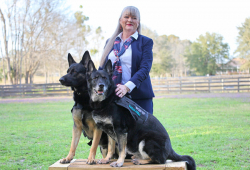
Mrs. Borden’s expertise and accomplishments are acknowledged by numerous national awards from various industries and agencies including the 2018 Corporate Pet Industry Woman of the Year and multiple awards for her organization’s work in mental health and suicide prevention.
She is frequently requested as a Keynote Speaker, and as an Industry Consultant to teach service dog laws to judicial systems, attorneys, and businesses, and to assist in service dog bills in multiple states that were passed into law. In 2020, she started an Institute for Higher Learning and the Borden Veterinary Hospital. Additionally, she has written and teaches college-accredited/VA-approved apprenticeship courses on dog training and service dog training.
- Service Dogs in Restaurants and Retail Stores: Public Access Best Practices - October 15, 2026
- Suicide Prevention Month: How Service Dog Teams Support Connection, Routine, and More! - September 26, 2026
- Final Call for Tickets: Guardian Angels’ Pawtumn Bark-A-Que Is This Saturday - September 29, 2026