
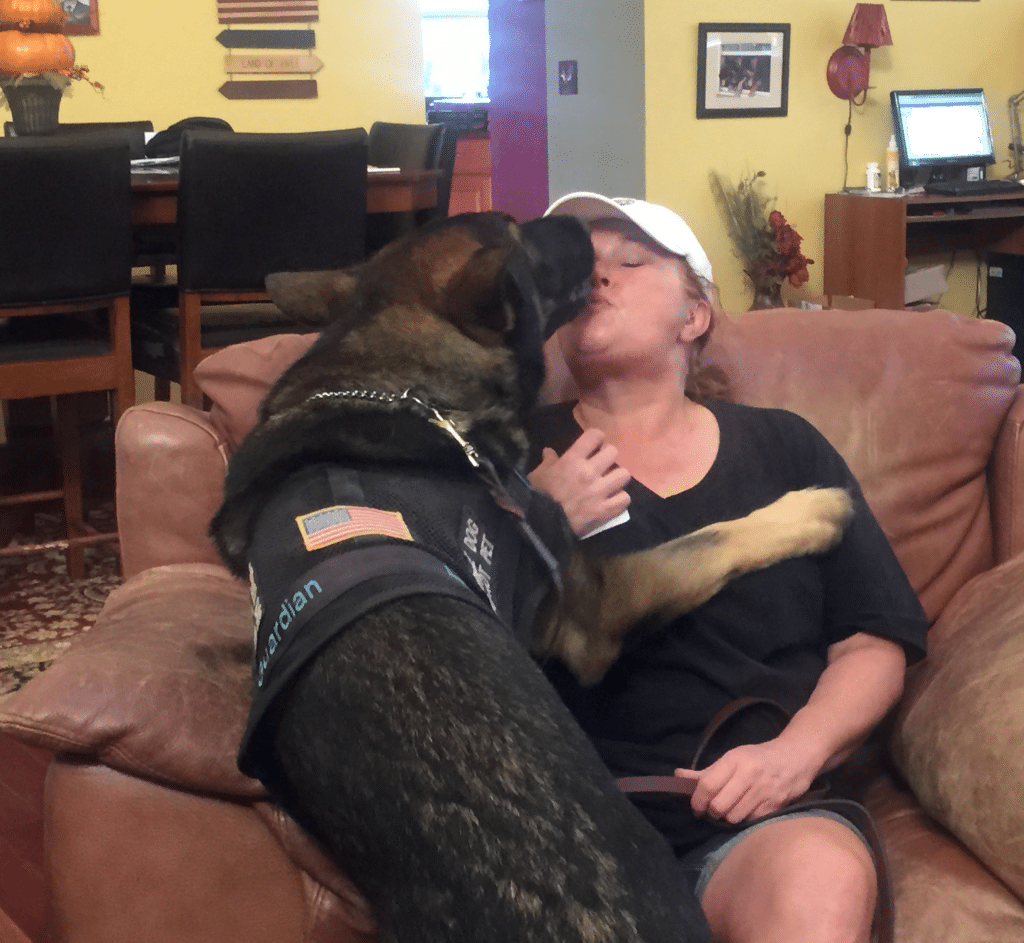
When a service dog enters the life of someone with a disability, whether it’s PTSD, a seizure disorder, or mobility challenges, the transformation is often profound. But what many don’t realize is that the benefits of a service dog extend far beyond the individual recipient. Like ripples in a pond, the presence of a highly trained service dog can bring calm, stability, and renewed connection to the entire household.
When a service dog enters the life of someone with a disability, whether it’s PTSD, a seizure disorder, or mobility challenges, the transformation is often profound. But what many don’t realize is that the benefits of a service dog extend far beyond the individual recipient. Like ripples in a pond, the presence of a highly trained service dog can bring calm, stability, and renewed connection to the entire household.
From easing the daily stress on spouses and caregivers to helping children feel more secure, service dogs help to reshape family dynamics. They foster emotional healing, create opportunities for social interaction, and even rebuild relationships that may have been strained by years of trauma or hardship.
Reducing Daily Stress for Spouses, Children, and Caregivers
Living with a loved one who faces significant medical or psychological challenges can take a toll on the entire family. Spouses often carry the emotional and logistical burden of caregiving, which can lead to chronic stress, compassion fatigue, and burnout. The average divorce rate in the U.S. is around 47%, but when a family member is disabled, this rate increases by an additional 90%.
PTSD impacts the individual’s ability to control their emotions. This can cause them to become angry, sad, anxious, or happy in an instant. In severe cases, this can lead to flashbacks and night terrors that can become violent; that’s where the service dog can make a significant difference.
For example, individuals with PTSD may struggle with night terrors, panic attacks, or emotional shutdowns. A service dog trained to recognize and interrupt these episodes can reduce the frequency and severity of symptoms—giving both the recipient and their spouse more restful nights and calmer days.
In families with a member who has PTSD, children can experience intergenerational PTSD. When children grow up in a family that has these kinds of challenges going on within the home, they’re impacted by it as well because they, too, feel like they must walk on eggshells. They have less of an ability at a young age to understand those emotional mood swings and why they happen. They don’t understand it at all because one minute they’re having an everyday conversation with someone and the next minute that person is having an outburst of some sort. It is challenging for children to grow up in a household like that.
Additionally, suppose that a disabled individual is also suffering from suicidal ideations, which we see a lot at Guardian Angels Medical Service Dogs. In that case, the children now have this enormous pressure on them of worrying that their parent is going to commit suicide and thinking that somehow, it’s their fault.
The arrival of a service dog can offer a much-needed reprieve and help children feel safer. When they see their parent is more in control, more engaged, and less reactive, it lifts a tremendous emotional weight. Many families report that their children become more affectionate and expressive once the service dog joins the household.
In addition to relieving some of the emotional toll on the family, service dogs also perform practical tasks, such as medication reminders, alerting to seizures or drops in blood sugar, or even retrieving items. This helps relieve spouses from constant worry and allows them to step back from the full-time caregiver role. This shift enables couples to reconnect as partners rather than patients and caregivers.
“Our dog gave me my spouse back,” is a sentiment we hear often at Guardian Angels Medical Service Dogs. That simple statement speaks volumes about the power of healing—not just for the individual but also for the marriage and other relationships within the family.
Encouraging Social Interaction and Community Engagement
One of the lesser-known side effects of trauma, chronic illness, or disability is social withdrawal. Whether due to embarrassment, fear of judgment, or overwhelming anxiety, many recipients isolate themselves from friends, family, and community events.
But when a service dog enters the picture, the dynamic shifts. The dog provides comfort and confidence in public spaces, helping the recipient feel more at ease and more grounded. At the same time, the dog naturally attracts positive attention and curiosity, creating a bridge to friendly conversation and social reintegration.
For families, this means more outings, more opportunities for connection, and the ability to rebuild a social life that may have been lost. Parents may start attending their child’s school functions again. Couples might feel comfortable going out to dinner. Children may see their parents smile and engage with others for the first time in years.
A story from Carol Borden, our Chief Executive Officer and Founder, demonstrates the power of a medical service dog helping a recipient engage socially:
I was attending an event for the National Guard, which is one of our big supporters. This event was their National convention in Michigan. We had a team who lived in that area, and the recipient was a guardsman, so they were working our booth with her new service dog and her husband.
I went up to meet them and say hello, when the husband said, “I have a bone to pick with you.” And I said, “Really?” And he said, “Yes.” He said, “You’ve cost me a lot of money.” I said, “Oh my goodness, why? What happened?” He said, “My wife was homebound for so many years that I sold her car and she wouldn’t go out. She wouldn’t do anything,” he said. “Now that she has her service dog, she goes everywhere, and I have to buy her a new car,” he said.
He wasn’t angry at all, just joking around, but it was such a great interaction. During that week, the recipient went up on stage with her service dog at a dinner for 3,000 people to tell her story.
And you know, who can do that? I mean, even people that don’t have disabilities typically don’t want to do that, but that is the miraculous change that these dogs bring to people’s lives.
Learn More About the Power of Medical Service Dogs Today!
At Guardian Angels Medical Service Dogs, we’ve seen time and again how one dog can heal an entire household. The effects may begin with the recipient, but they don’t end there. Spouses breathe easier, children feel safer, and relationships grow stronger.
If you or a loved one could benefit from the life-changing power of a service dog, we invite you to learn more about our mission, our process, and the stories of families who are thriving again thanks to their medical service dog.
To learn more about what medical service dogs can do, click here. If you have questions about medical service dogs or our application process, contact us today!
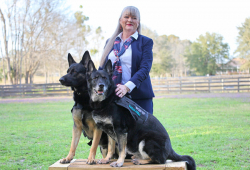
Mrs. Borden’s expertise and accomplishments are acknowledged by numerous national awards from various industries and agencies including the 2018 Corporate Pet Industry Woman of the Year and multiple awards for her organization’s work in mental health and suicide prevention.
She is frequently requested as a Keynote Speaker, and as an Industry Consultant to teach service dog laws to judicial systems, attorneys, and businesses, and to assist in service dog bills in multiple states that were passed into law. In 2020, she started an Institute for Higher Learning and the Borden Veterinary Hospital. Additionally, she has written and teaches college-accredited/VA-approved apprenticeship courses on dog training and service dog training.