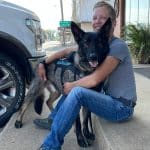

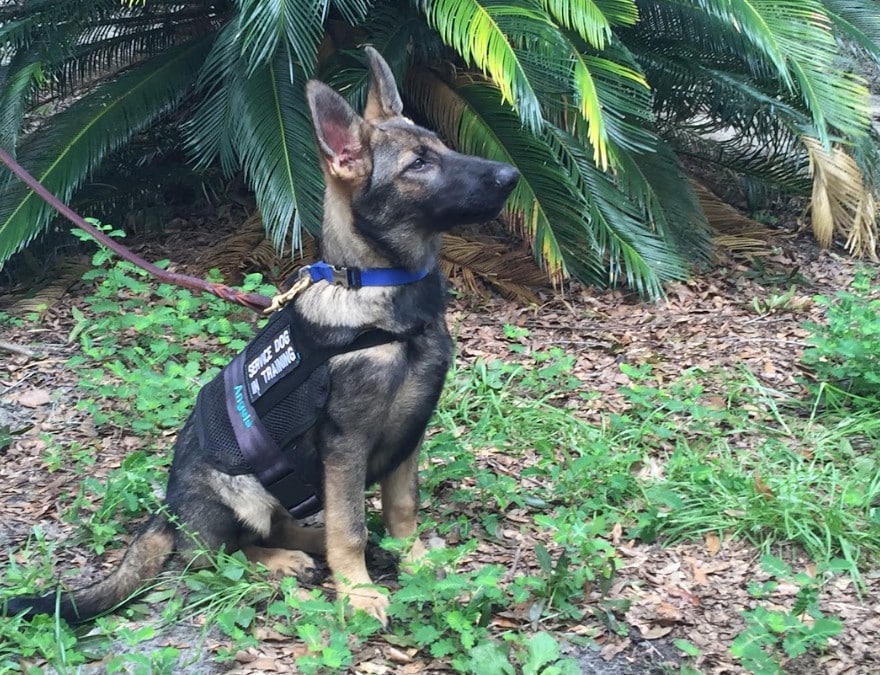
Dogs provide joy, companionship, and comfort to millions of people. For many families, pets are beloved members of the household, providing unconditional love and emotional support. At Guardian Angels Medical Service Dogs, we deeply respect that bond. However, when dogs are brought to public spaces, ownership comes with serious responsibility, especially when service dogs are present.
These incidents can cause irreversible harm to service dogs and devastating consequences for the people who rely on them for independence, safety, and quality of life. Public understanding of service dogs and taking accountability for their pets is essential in preventing this issue.
What Is the Role of a Service Dog?
Unlike a pet, a service dog is a highly trained, task-specific medical device protected under federal law, whose primary role is to mitigate the symptoms of a disability. At Guardian Angels Medical Service Dogs, our service dogs assist individuals with a variety of medical conditions, including, but not limited to:
- Post-traumatic stress disorder (PTSD)
- Traumatic brain injury (TBI)
- Mobility impairments
- Neurological and medical conditions
- Alerting in advance of seizures or diabetic changes
Medical service dogs are trained to perform tasks such as interrupting panic attacks or night terrors, alerting to medical changes, creating physical space in crowded environments, and helping their recipient pick up dropped items. Our medical service dogs are trained to meet the specific needs of each recipient.
Their training is extensive, intentional, and ongoing. It requires years of professional work, careful socialization, public access conditioning, and intensive bonding with the recipient.
Service dogs are taught to remain calm, neutral, and non-reactive in public. They are trained to ignore distractions, including food, noise, and other dogs. While they are extensively trained, no type or amount of training can make a service dog immune to trauma.
For additional education on service dog access and public awareness, visit our related articles in the Guardian Angels Medical Service Dogs blog.
What Happens When a Service Dog Is Attacked?
Each year, Guardian Angels Medical Service Dogs sees dozens of our service dogs attacked or threatened by other dogs while they are performing their duties. These attacks often come from:
- Dogs on flexi leads with too much distance
- Dogs that are allowed to roam yards or neighborhoods
- Dogs that are brought into stores without proper training
- Dogs that break free from their owners
Sometimes the damage is physical. Sometimes it is psychological. Oftentimes, it is both.
How an Attack on a Service Dog Goes Beyond Physical Injury
Veterinary injuries are serious and costly, but they are often treatable. The greater risk of an attack on a service dog is psychological trauma. When a service dog is attacked, the dog may begin to associate other dogs with danger. This can result in:
- Barking at other dogs
- Lunging defensively
- Loss of focus in public spaces
- Increased anxiety or vigilance
These responses are natural trauma reactions, but they are not acceptable for a working service dog. If a service dog can no longer maintain calm, neutral behavior in public, that dog may be forced into early retirement.
Service dogs are a significant investment, costing tens of thousands of dollars in training, care, and preparation. At Guardian Angels, we provide these dogs at no cost to recipients, including years of professional training, medical care and evaluations, specialized task training, and long-term follow-up and support.
When a service dog is attacked and is unable to work, the loss is enormous, with thousands of training hours wasted and years of careful conditioning undone. The worst consequence is that a critical medical device is removed from someone’s life. In some cases, the damage is irreversible, regardless of how much retraining is attempted.
The Effects on the Recipient When Their Service Dog Is Attacked
Many of our recipients have lived with severe disabilities for years, have experienced isolation, fear, or trauma, and have avoided public spaces due to anxiety or safety concerns. Some have not left their homes in decades, while some have not entered a store alone in years. Others have not even left their bedroom for months.
Receiving a service dog is not just about mobility or assistance—it is about the recipient reclaiming their independence and quality of life.
When a service dog is attacked, the recipient may:
- Stop leaving their home
- Experience a rapid return of anxiety or panic
- Lose confidence in their safety
- Withdraw from community life
In severe cases, the loss of a service dog can contribute to deep psychological distress, including suicidal ideation.
Service Dogs vs. Emotional Support Animals
Service dogs are trained to perform tasks that assist individuals with disabilities and are protected under the Americans with Disabilities Act (ADA).
Emotional Support Animals (ESAs) provide comfort but are not trained for public access and are not legally permitted in non-pet-friendly spaces.
Untrained dogs in public places place service dog teams at risk. Learn more in our service dog education resources.
How You Can Help Protect Service Dogs
- Keep your dog securely leashed and under control
- Never allow your dog to approach a working service dog
- Do not bring non-service dogs into non-pet-friendly spaces
Let’s Work Together to Keep Service Dog Teams Safe
When we control our own dogs, we protect someone else’s chance at independence. That is a responsibility worth honoring.
Guardian Angels Medical Service Dogs pairs highly trained service dogs at no cost to recipients nationwide. Discover more about our mission and how you can help create safer, more inclusive communities for people with disabilities.
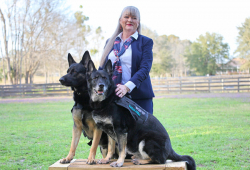
Mrs. Borden’s expertise and accomplishments are acknowledged by numerous national awards from various industries and agencies including the 2018 Corporate Pet Industry Woman of the Year and multiple awards for her organization’s work in mental health and suicide prevention.
She is frequently requested as a Keynote Speaker, and as an Industry Consultant to teach service dog laws to judicial systems, attorneys, and businesses, and to assist in service dog bills in multiple states that were passed into law. In 2020, she started an Institute for Higher Learning and the Borden Veterinary Hospital. Additionally, she has written and teaches college-accredited/VA-approved apprenticeship courses on dog training and service dog training.
- What Every Dog Owner Should Know About Service Dogs and Public Safety - January 23, 2026
- Holiday Safety Tips for Service Dogs: What Recipients and the Public Should Know - December 17, 2025
- Message from Our Founder – 2025: A Year of Life-Changing Service - December 5, 2025